
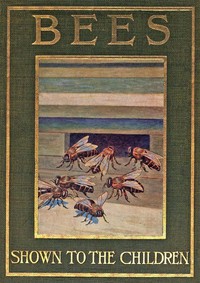
Bees, Shown to the Children by Ellison Hawks
Published in 1912, Ellison Hawks's book is exactly what the title promises: a clear, patient introduction to the world of bees, written as if he's showing something wonderful to a child. There's no complex plot in the traditional sense. Instead, the 'story' is the life cycle of the hive itself.
The Story
The book walks you through a bee's life from start to finish. Hawks begins by describing the three types of bees in a colony: the queen, the workers, and the drones. He then explains the hive's layout, from the waxen cells used as nurseries and pantries to the intricate social rules that govern every bee's job. You'll follow the worker bee on her journey from cleaning the nursery, to feeding larvae, to building comb, and finally to her dangerous flights as a forager. Hawks covers major events like the queen's mating flight, the fascinating 'waggle dance' bees use to communicate, and the tense, noisy process of swarming when a colony splits in two. It's a full year in the life of a hive, packed with instinct, duty, and survival.
Why You Should Read It
What makes this old book special is its tone. Hawks writes with genuine wonder and respect. He isn't just presenting facts; he's sharing a passion. You can feel his admiration for the worker bee's relentless work ethic and the elegant efficiency of the hive. In a world of frantic digital noise, there's something incredibly calming about focusing on the slow, purposeful rhythm of nature this way. It’s also a snapshot of a time when nature study was a common hobby. His straightforward explanations about honey production, wax-making, and pollination feel timeless and deeply satisfying.
Final Verdict
This book is a hidden gem for curious minds of all ages. It's perfect for a parent or teacher looking for a clear, engaging science read for a child. It's also ideal for any adult who wants a short, peaceful escape into nature, or for a budding gardener or beekeeper seeking a foundational understanding. If you enjoy the quiet wonder of authors like Jean-Henri Fabre, you'll feel right at home here. Just be prepared—after reading it, you'll never look at a buzzing insect in your garden the same way again.
No rights are reserved for this publication. Preserving history for future generations.
Robert Taylor
1 year agoIt took me a while to process the complex ideas here, but the structural organization allows for quick referencing of key points. Truly a masterpiece of digital educational material.
Thomas Thompson
6 months agoI was skeptical about the depth of this book at first, but the concise summaries at the end of each section are a lifesaver. I am looking forward to the author's next publication.
Thomas Young
1 year agoAs someone who reads a lot, it manages to explain difficult concepts in plain English. Exactly what I needed.
Charles Scott
2 years agoHigh quality edition, very readable.



Thomas Gonzalez
2 months agoThe clarity of the concluding remarks is very professional.