
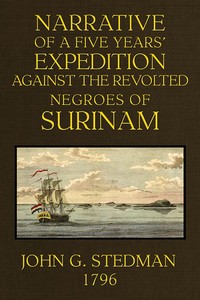
Narrative, of a five years' expedition against the Revolted Negroes of Surinam,…
John Gabriel Stedman's Narrative of a Five Years' Expedition is not a novel. It's a real diary, published in 1796, written by a man caught in an impossible situation. In 1772, the Dutch colony of Surinam was in chaos. Enslaved Africans, led by fierce Maroon warriors, had escaped the plantations and built fortified communities in the jungle, waging a successful guerilla war for their freedom. The colonial government was desperate. Stedman, a young captain in the Scottish Brigade, was hired to lead a campaign to defeat them.
The Story
The book follows Stedman's mission from his hopeful arrival to his shattered departure. He details the grueling marches through swamps and rainforests, the failed attacks on Maroon villages, and the constant threat of disease and ambush. But the real story isn't the battles. It's what Stedman witnesses and experiences. He describes, in stark detail, the unimaginable cruelty inflicted upon enslaved people on the plantations—the very people he was supposedly protecting. He forms a deep relationship with an enslaved woman named Joanna, and his love for her and their son clashes violently with his role as a soldier for the slave-owning class. The journal becomes a record of his growing disgust and moral confusion.
Why You Should Read It
This book sticks with you because of its brutal honesty. Stedman doesn't come off as a hero. He's often conflicted, sometimes prejudiced, and ultimately powerless to change the system. That's what makes it so compelling. You're not getting a polished, political treatise against slavery (though it became one). You're getting the messy, real-time thoughts of a participant who knows what he's doing is wrong. His descriptions of the natural beauty of Surinam are breathtaking, which makes the human cruelty he documents even more jarring. His relationship with Joanna is tender and tragic, a personal story that grounds the huge historical forces at play.
Final Verdict
This is a challenging but essential read. It's perfect for readers who love primary sources and want to feel immersed in a historical moment, not just read about it. It's for anyone interested in colonial history, the Atlantic slave trade, or military history from the grunt's-eye view. Be warned: the descriptions of violence are graphic and upsetting. But if you can sit with that discomfort, you'll find a profoundly human document—a story of a beautiful place, a horrific institution, and one man's struggle to keep his soul intact.
There are no legal restrictions on this material. Knowledge should be free and accessible.
Jessica Johnson
2 months agoWhile browsing through various academic sources, the footnotes provide extra depth for those who want to dig deeper. Finally, a source that prioritizes accuracy over hype.
Margaret Johnson
3 months agoIf you're tired of surface-level information, the historical context mentioned in the early chapters is quite enlightening. Thanks for making such a high-quality version available.
Charles Wilson
3 months agoExactly what I was looking for, thanks!









Richard Jackson
1 year agoIt took me a while to process the complex ideas here, but the narrative arc keeps the reader engaged while delivering factual content. It definitely lives up to the reputation of the publisher.