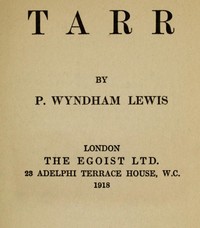
Tarr by Wyndham Lewis
Let's talk about Tarr. Published in 1918 but set just before World War I, this novel drops us into the bohemian art scene of Paris. It's not a cozy, romantic portrait. Think smoky cafes, big ideas, and even bigger egos.
The Story
The plot orbits around Frederick Tarr, a cynical English painter who believes in separating art from messy human emotions. He's entangled with Bertha Lunken, a sincere but possessive German woman he finds himself engaged to almost by accident. Tarr's philosophy is put to the test when he meets Anastasya, a sleek, intellectual Russian who represents his ideal of a detached, modern relationship. Stumbling through the middle of this is Otto Kreisler, a broke, volatile German artist whose life is a spectacular train wreck of jealousy, humiliation, and violence. The story follows these four as they collide, manipulate each other, and debate the nature of love, art, and civilization while their personal lives spiral into absurdity and tragedy.
Why You Should Read It
I'll be honest, you don't read Tarr for a warm hug. You read it for the electric, brutal prose and characters who are brilliantly awful. Lewis isn't interested in making them likable; he's interested in dissecting them. Tarr's cold theories about emotion feel both repellent and weirdly logical. Kreisler is a pathetic, explosive force of nature—you cringe at his actions, but you can't stop watching. The book is savagely funny in a dark, intellectual way. It captures a specific moment when old European certainties were cracking, and people were desperately, often foolishly, trying to invent new ways to live and love. The conversations feel shockingly fresh, full of witty insults and philosophical one-upmanship.
Final Verdict
This book is perfect for readers who love character-driven novels where no one is a hero. If you enjoy the psychological precision of Dostoevsky, the social satire of Evelyn Waugh, or the modernist edge of Hemingway's early work, you'll find a lot to chew on here. It's not an easy beach read—it demands your attention—but it's incredibly rewarding. You'll come away with lines and scenes burned into your memory. Just don't expect to root for anyone. You're here to observe the beautifully crafted disaster.
This digital edition is based on a public domain text. Thank you for supporting open literature.