
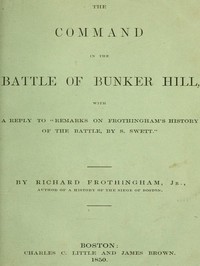
The Command in the Battle of Bunker Hill by Richard Frothingham
So, what's this book actually about? On the surface, it's a detailed look at the Battle of Bunker Hill from June 17, 1775. But Frothingham isn't interested in giving you a simple play-by-play. His real goal is to untangle a knotted historical argument: who was the commanding officer for the American forces that day?
The Story
The book walks us through the confusing chain of events. Colonel William Prescott led the men who built the fortifications on Breed's Hill. General Israel Putnam was racing around, giving orders and boosting morale. Dr. Joseph Warren, a political leader, arrived just before the fighting started. After the battle, reports were contradictory. Prescott said he was in command. Putnam's supporters claimed he was. The legend of the 'whites of their eyes' order got attached to Putnam, but evidence was thin. Frothingham acts like a legal scholar, presenting testimony from soldiers, official dispatches, and later histories. He carefully shows how myths formed and why it mattered so much to the people involved—their reputations and legacy were on the line.
Why You Should Read It
What grabbed me was how modern this old debate feels. It's about memory, fame, and how stories get shaped after a major event. Frothingham makes you feel the frustration of trying to find the truth when everyone has an angle. You see the early American desire for heroes, and how that desire could rewrite facts. It’s not a dry list of dates; it's a persistent attempt to set the record straight. You get a real sense of the chaos of war and the even bigger chaos of trying to explain it afterwards. The characters aren't just names—they're men fiercely protecting their version of history.
Final Verdict
This isn't a casual beach read. It's perfect for history buffs, especially American Revolution enthusiasts, who enjoy 'how do we know what we know?' puzzles. If you like books that challenge the simplified version of events you learned in grade school, you'll appreciate Frothingham's work. It’s also great for anyone interested in how history gets written and how myths are born. Be prepared for dense detail and 19th-century writing style, but the core mystery is genuinely compelling. Think of it as the original podcast deep-dive, but in book form.
This book is widely considered to be in the public domain. You can copy, modify, and distribute it freely.
Linda Martin
1 year agoOne of the most comprehensive guides I've read this year.
Christopher Moore
5 months agoAs someone working in this industry, I found the insights very accurate.
Linda Perez
4 months agoI particularly value the technical accuracy maintained throughout.
Jessica Davis
4 months agoIf you're tired of surface-level information, the emphasis on ethics and sustainability within the topic is commendable. This has become my go-to guide for this specific topic.
Jessica Moore
1 year agoI appreciate how this edition approaches the core problem, the narrative arc keeps the reader engaged while delivering factual content. Well worth the time invested in reading it.