
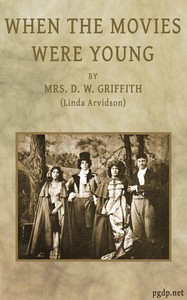
When the movies were young by Linda Arvidson
Forget dry history textbooks. Linda Arvidson’s When the Movies Were Young is a front-row seat to the birth of an art form, told by someone who lived it. Arvidson was an actress and, more famously, the first wife of pioneering director D.W. Griffith. This is her personal memoir of those chaotic, thrilling years from about 1908 to 1913, when movies grew from cheap novelty acts into a powerful storytelling medium.
The Story
The book doesn’t follow a single plot. Instead, it’s a series of vivid snapshots and anecdotes. We follow Arvidson and Griffith from their early days as struggling stage actors in New York to the cramped Biograph studio, where Griffith started directing. We see the move to the wide-open spaces of California, the birth of Hollywood, and the invention of film techniques we now take for granted—like the close-up or cross-cutting for suspense. The real story is the daily scramble: finding locations, dealing with terrible early cameras, and working with a ragtag company of actors who were making up the rules as they went along.
Why You Should Read It
What makes this book special is its intimate, ground-level view. Arvidson isn’t a distant scholar; she’s telling you about her friends, her husband, and her work. You get the gossip, the frustrations, and the sheer wonder of it all. She paints D.W. Griffith not as a legendary figure, but as a passionate, sometimes difficult man obsessed with capturing real emotion on film. You feel the excitement of discovery on every page. It’s a reminder that these giants of cinema were just people in a room, trying something no one had ever done before, and often failing spectacularly on their way to success.
Final Verdict
This is a must-read for any movie fan who wants to understand where it all began. It’s perfect for history buffs who prefer diaries to dates, and for anyone who loves a good behind-the-scenes story. If you’ve ever watched a silent film and wondered about the world that created it, Arvidson opens the door and invites you right in. Just be prepared—her lively, personal account might ruin you for more formal film histories forever.
This text is dedicated to the public domain. It is now common property for all to enjoy.
Nancy Johnson
11 months agoThe analytical framework presented is both innovative and robust.
Paul Williams
1 year agoClear, concise, and incredibly informative.
Matthew Davis
11 months agoThe clarity of the introduction set high expectations, and the structural organization allows for quick referencing of key points. A rare gem in a sea of mediocre content.
John Thompson
1 year agoI was particularly interested in the case studies mentioned here, the author’s unique perspective adds a fresh layer to the discussion. I'm glad I chose this over the other alternatives.


Emily Thompson
5 months agoI decided to give this a try based on a colleague's recommendation, the formatting on mobile devices is surprisingly crisp and clear. A solid investment for anyone's personal development.